- All products
- Single sided tapes
- Paper
- Paper joint tape
- Paper
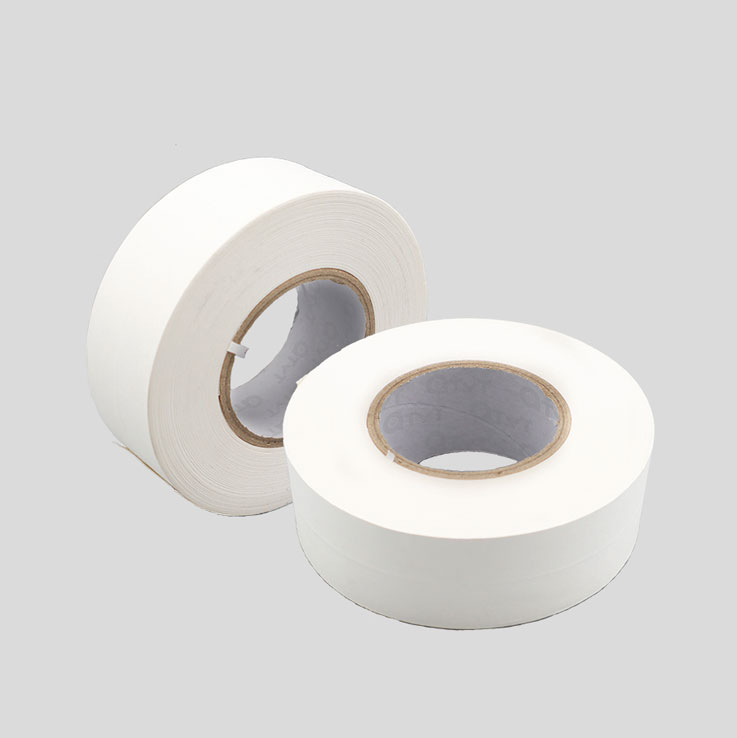




Paper Joint Tape
ATyT’s paper joint tape is designed to reinforce and provide a uniform finish to the joints between plasterboard panels. Made with a microperforated cellulose paper backing, it offers good tear resistance and makes joint finishing work easier in drywall construction, partition systems and interior linings.
This plasterboard joint tape allows the joints between boards to be reinforced by embedding it in the joint compound, helping to achieve a continuous surface ready for the finishing work that follows. Its paper structure makes it easier to integrate with the joint compound and helps produce a smooth, uniform result.
Thanks to its composition, the plasterboard joint tape is especially suited to installation and repair work on walls, partitions and suspended ceilings. Using it reinforces the joint areas between panels, where small cracks can appear as a result of movement or stress in the construction system.
One of its main features is that it is made as a microperforated paper tape. The microperforations help the joint compound to bond with the tape and help reduce air bubbles forming during application, making it easier to achieve a uniform finish.
As a taping tape for joints, it is designed to be applied together with compounds and pastes made specifically for plasterboard. Its tear resistance makes it easier to handle during installation, both with hand tools and with compatible taping equipment.
The joint reinforcement tape can also be used to repair small cracks and fissures on compatible interior surfaces. Once embedded between layers of compound, it provides localized reinforcement that helps improve the continuity of the finish.
In drywall applications, this gypsum board joint tape makes it possible to treat the longitudinal and transverse joints between boards, helping to reduce the visibility of the joints after the relevant coats of compound have been applied and sanded.
In addition, as a paper tape for construction, it can be used in renovation and refurbishment of interior spaces, especially in projects that require smooth surfaces ready for paint or other decorative finishes.
Its use as a drywall finishing tape makes it easier to prepare walls and ceilings, allowing joints to blend into a visually uniform surface. Correct application of the compound, embedding of the tape and the finishing treatment that follows are essential to achieving a professional result.
Thanks to these characteristics, ATyT’s paper joint tape is a practical solution for plasterboard installers, construction professionals, renovation companies and interior finishing specialists who are looking for strength, ease of application and uniformity in joint treatment.
ADHESIVE PROPERTIES | VALUES |
Total thickness | 210μm |
Total weight | 140 g/m² |
Density | 0,62 g/cm³ |
Tensile strength | 7,28 kN/m (Urdimbre) |
Advantages That Make the Difference
- High adhesion with joint compounds: its cellulose paper backing integrates well with the compounds used to treat joints between plasterboard panels.
- Microperforated paper that prevents bubbles: the microperforations help the tape settle onto the surface and help prevent air pockets forming during installation.
- Tear resistance and ease of handling: has good tensile strength, making placement and handling easier during taping work.
- Tool compatible: allows joint treatment to be carried out using different application systems, adapting to the needs of each installer.
- Uniform finishes and recyclable material: makes it easier to achieve smooth, distortion-free surfaces. Its cellulose paper backing is a cellulose-based and recyclable alternative, depending on waste management conditions.
Application Conditions
To ensure optimal performance of the paper joint tape:
- The surface must be clean, dry and free of dust, grease, oil and any substance that could hinder adhesion.
- Prepare the joint compound following the manufacturer’s instructions.
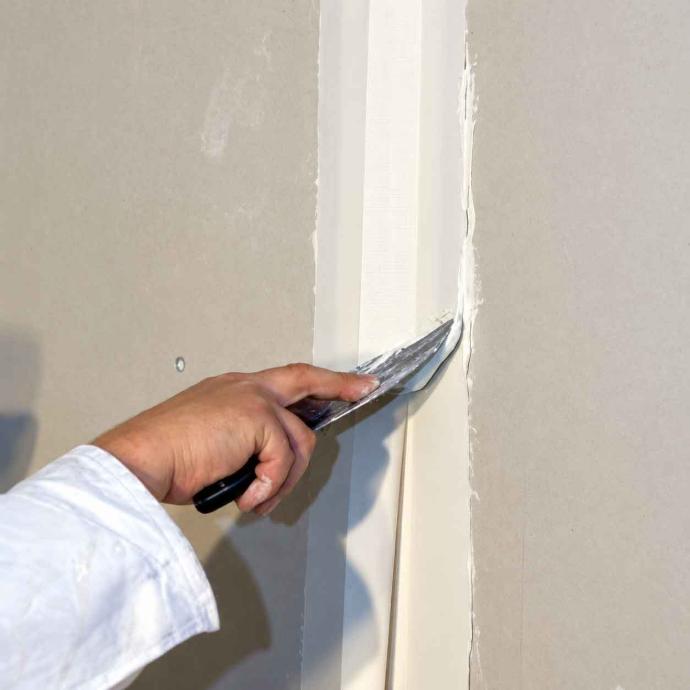
- Apply a first coat of compound over the joint between plasterboard panels.
- Place the tape centered over the joint, ensuring even distribution.
- Press the tape with a putty knife or compatible taping tool, helping it bond with the compound and removing any air pockets.
- Avoid creases, distortions or areas without enough contact with the joint compound.
- Apply the subsequent coats of compound according to the installation system and respect the recommended drying times.
- Check that the surface has a uniform finish before sanding, painting or texturing.
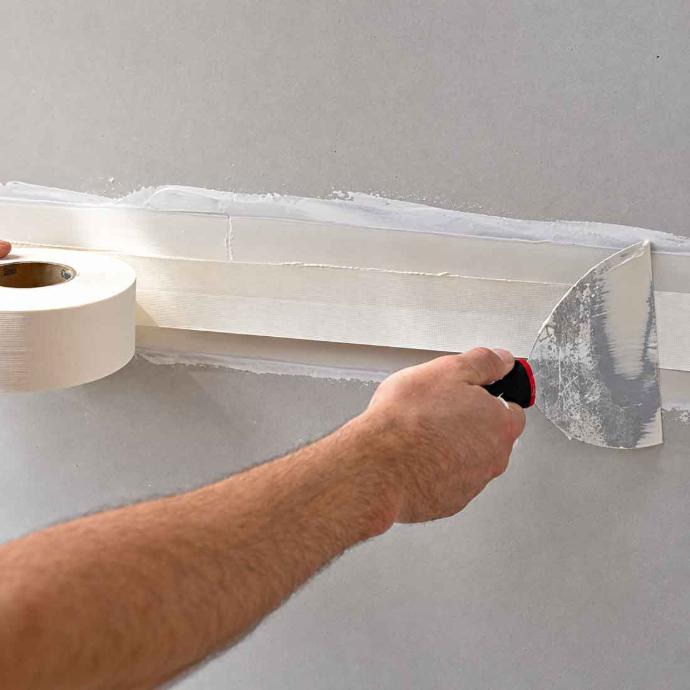
Reinforcing Plasterboard Joints with Microperforated Paper Tape
Marc, an installer specializing in plasterboard systems, was refurbishing an office space where he needed to achieve a smooth, uniform finish on the walls and suspended ceilings.
He was looking for a strong, easy-to-apply solution that would reinforce the joints between boards, reduce the appearance of cracks and prepare the surfaces for the painting work that followed.
After analyzing the needs of the project, ATyT recommended the paper joint tape, made with a microperforated, tear-resistant cellulose paper backing. Its structure makes it easier to integrate with the joint compound and helps reduce air bubbles forming during installation, supporting a uniform finish.
During the work, Marc used the plasterboard joint tape to reinforce the longitudinal and transverse joints between boards.
He applied a first coat of compound, placed the tape centered over each joint and pressed it until it was evenly embedded. He then completed the treatment with the necessary coats of compound and the corresponding sanding.
Thanks to this solution, Marc was able to reinforce the joints and prepare the surfaces for painting, achieving a visually continuous finish.
ATyT’s microperforated paper tape thus became part of his regular installation and renovation work, making professional joint treatment on walls and suspended ceilings easier.
Frequently Asked Questions
Paper joint tape is used to reinforce the joints between plasterboard panels on walls, partitions and suspended ceilings. It is embedded in the joint compound, helping to improve surface continuity and achieve smooth, uniform finishes before painting or applying decorative coatings.
Microperforated paper tape makes it easier to integrate with the joint compound and helps reduce air bubbles forming during application. In addition, its cellulose paper backing offers tear resistance and allows easy handling during installation work.
No. ATyT’s plasterboard joint tape does not have its own adhesive. To install it correctly, it must be placed over a first coat of joint compound and pressed until it is embedded in the compound. The relevant finishing coats are then applied.
Yes. The joint reinforcement tape can be used to repair small and medium cracks on compatible interior surfaces. Embedding it in the repair compound provides localized reinforcement that helps improve the continuity of the finish. It is important to correct the cause of the crack beforehand where there is structural movement.
Yes. The gypsum board joint tape is designed to treat the longitudinal and transverse joints between panels installed on walls, partitions and suspended ceilings. It can also be used in drywall construction, refurbishment and interior renovation work.
The joint taping tape must be placed over a first coat of joint compound, on a surface that is clean and dry beforehand. The tape must be centered and pressed with a putty knife to remove any air pockets, and subsequent coats of compound must be applied respecting the drying times stated by the manufacturer.
Paper joint tape is made from microperforated cellulose paper and must be embedded in a joint compound. Many mesh tapes, on the other hand, are made from fiberglass and have an adhesive to make initial placement easier. The choice depends on the board system, the type of joint and the recommendations of the materials’ manufacturer.
It is recommended to keep the paper tape for construction in its original packaging, in a clean, dry place, at a temperature between 20 and 30 °C, protected from moisture and direct sunlight. To preserve its properties, it is recommended to use it within 24 months of receipt.
More than 1,500 customers have already placed their trust in ATyT.
Do you want to offer adhesive solutions that are up to the task of your projects?
Contact our technical team, and we’ll help you choose the adhesive tape that best suits your needs.
Select Your Country


