- All products
- Double sided
- TNT
- TNT double-sided tape with solvent-based adhesive
- TNT
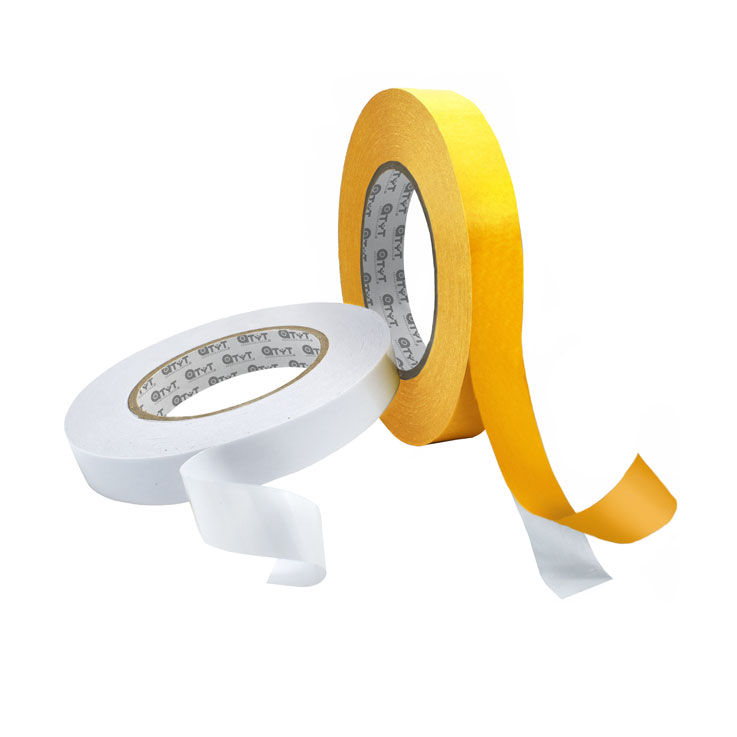
Double-sided non-woven tape with solvent adhesive
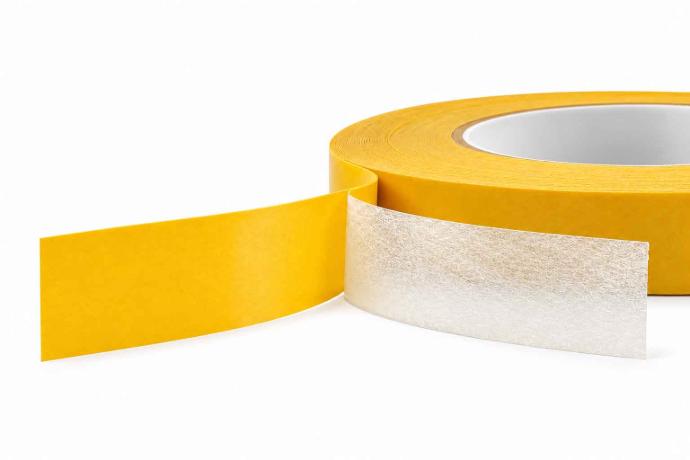
ATyT's double-sided non-woven tape with solvent adhesive is designed for laminating, mounting and fixing applications that require a flexible, conformable and thin solution. It is made with a non-woven fabric carrier, coated on both sides with solvent-based acrylic adhesive and protected on the top side by a siliconised paper liner.
This range is available in different thicknesses —80 µm, 90 µm, 100 µm and 150 µm—, allowing you to choose the most suitable configuration according to the materials, the surface characteristics and the specific requirements of each assembly.
Thanks to its structure, this non-woven adhesive tape can adapt to slightly irregular surfaces and offers good properties for bonding substrates subject to dimensional changes. Its conformability allows it to be integrated into various industrial processes where a thin, precise bond is required.
The use of a solvent-based acrylic adhesive provides high adhesive strength and secure fixing of parts. Thanks to these characteristics, this solvent double-sided tape is a particularly suitable solution for demanding industrial converting and assembly processes, including the fixing of profiles, mouldings, automotive parts and other components where a durable, stable bond is required.
One of its main applications is the lamination of flexible materials. It can be used as a foam tape in processes where an adhesive layer needs to be added to this type of material, and as a felt tape in laminating and subsequent mounting work. It can also be used with fabrics and in certain applications on plastics and rubbers; it is advisable to check compatibility beforehand when working with hard-to-bond or low surface energy substrates.
It can also be used as a decorative panel tape, especially for fixing ABS panels and plastic displays. Its low thickness allows discreet assemblies between components, maintaining an adhesive bond without adding a bulky fixing system.
As an industrial double-sided tape, it is also suitable for bonding perforated metal nameplates and for various splicing operations. For example, it can be used for paper splices made manually or with automatic machinery.
Another area of application is the installation of carpets, flooring and coverings, where the choice of product reference should take into account the specific conditions of use, such as shear stress and possible exposure to temperature, humidity or ageing over the service life of the bond.
Its configuration makes it suitable as a thin mounting tape in applications requiring a fine, conformable adhesive solution. In addition, it can be torn by hand and the liner peels off easily once the tape has been applied, making it easy to handle during assembly.
ADHESIVE PROPERTIES | VALUES (80 µm) | VALUES (90 µm) | VALUES (100 µm) | VALUES (150 µm) |
Liner grammage | 90 g/m2 | 95 g/m2 | 100 g/m2 | 100 g/m2 |
Total thickness | 80 μm | 90 μm | 100 μm | 150 μm |
Rolling Ball Tack | ≤ 15 cm | ≤ 15 cm | ≤ 10 cm | ≤ 10 cm |
Adhesion to steel | ≥ 4 N/cm | ≥ 4.4 N/cm | ≥ 4,5 N/cm | ≥ 5,2 N/cm |
Application temperature range | [+10ºC - +40ºC] | [+10ºC - +40ºC] | [+10ºC - +40ºC] | [+10ºC - +40ºC] |
Service temperature range | [+10ºC - +90ºC] | [+10ºC - +90ºC] | [+10ºC - +90ºC] | [+10ºC - +90ºC] |
Advantages that make the difference: double-sided non-woven tape with solvent adhesive
- High conformability: adapts to different surfaces, even those with slight irregularities.
- Excellent fixing: the solvent-based acrylic adhesive provides high adhesive strength.
- Low thickness: suitable for assemblies where the thickness of the joint needs to be minimised.
- Easy handling: can be torn by hand and the liner is easy to remove after application.
- Industrial versatility: suitable for laminating, fixing parts, decorative panels, displays and splicing operations.
- Temperature resistance: the 80 and 90 µm versions in the data sheets provided have a stated range of −10 °C to 60 °C.
Application conditions for double-sided non-woven tape with solvent adhesive
To ensure optimum tape performance:
- Apply to clean, dry surfaces free of grease, oil, dust or other release substances.
- Apply pressure during application to promote proper contact between the adhesive and the surface.
- Avoid insufficient pressure, as this may affect the properties and appearance of the tape.
- Carry out a preliminary test to check compatibility and performance on the specific material.
- Store the product in its original packaging at a temperature of 20 to 30 °C, protected from humidity and direct sunlight.
Success story: double-sided non-woven tape with solvent adhesive
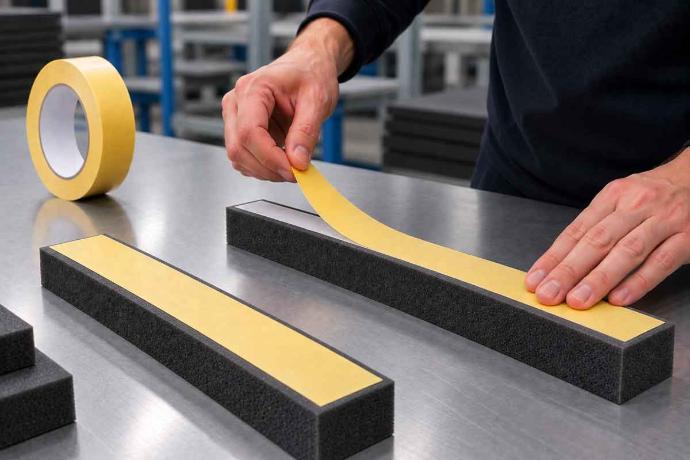
Marcos, production manager at a company that manufactures technical components, needed to add an adhesive layer to foam parts to make them easier to assemble later. The process required a thin, flexible solution that could adapt properly to the material.
After analysing the application, ATyT proposed using a double-sided non-woven tape with solvent adhesive. The tape was laminated directly onto the foam, keeping the siliconised paper liner as protection until the final assembly of each part.
The flexibility of the non-woven carrier made it easy for the tape to adapt to the foam, while the solvent adhesive provided the fixing required for the application. In addition, its low thickness made it possible to add the adhesive layer without adding excessive bulk to the finished component.
Using this foam tape made it possible to pre-prepare the parts and supply them ready for subsequent assembly, simplifying one stage of the production process and making final application easier for the operator.
After validating the solution, the company adopted the non-woven adhesive tape in the regular manufacture of these components and extended the same laminating system to certain felt parts and other flexible materials.
Frequently asked questions
It is a double-sided tape made of a non-woven fabric carrier coated on both sides with solvent-based acrylic adhesive and protected by a siliconised paper liner.
The main difference lies in the adhesive technology. This version uses a solvent-based acrylic adhesive, while the other uses a rubber adhesive. The choice should therefore be based on the materials, application conditions and required performance.
Yes. One of its main applications is as a foam tape, adding an adhesive layer to the material to make subsequent fixing or assembly easier.
Yes. It can be used as a felt tape and for laminating other compatible textile materials.
Yes. This decorative panel tape can be used in applications such as fixing ABS panels and plastic displays.
A thin mounting tape allows discreet joints and minimises the added thickness between the two bonded materials.
Yes. This industrial double-sided tape can be used in various splicing operations, including paper splices made manually or with automatic machinery.
It should be applied to clean, dry surfaces free of dust, grease or oil. Once positioned, apply even pressure to promote contact between the adhesive and the surface. For specific applications, a compatibility test is recommended beforehand.
More than 1,500 customers have already placed their trust in ATyT.
Do you want to offer adhesive solutions that are up to the task of your projects?
Contact our technical team, and we’ll help you choose the adhesive tape that best suits your needs.
Select Your Country


