- All products
- Single sided tapes
- Foams
- Foam pe tape sealed band
- Foams
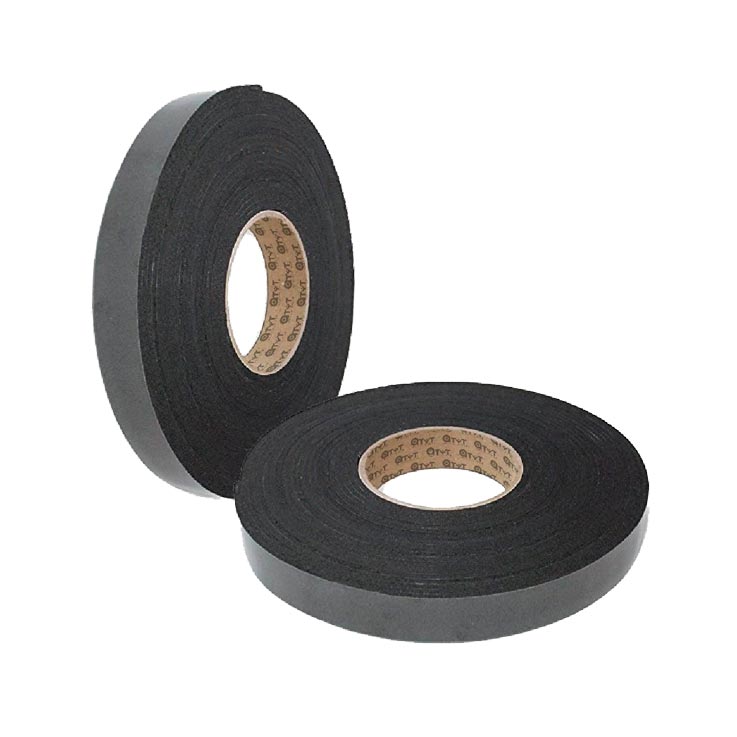


Self-Adhesive Foam Sealing Strip Tape
ATyT’s self-adhesive foam sealing strip tape is designed for sealing, acoustic insulation, vibration absorption and joint protection in construction systems. Made with a cross-linked polyethylene (PE) foam backing and a modified acrylic adhesive, it offers good conformability and dimensional stability, making it easy to install on different structural elements. This sealing strip tape features a cross-linked PE foam 3 mm thick with a density of 30 kg/m³, combined with a cold-laminated high-density polyethylene (HDPE) film. Its structure provides high resistance to condensation water and allows it to be used in applications where a flexible separation between materials is required.
One of its main features is its ability to act as a foam tape for acoustic insulation, helping to reduce the transmission of vibration and noise between building elements. Installed between the interior lining and the wall, it creates a mechanical separation that supports soundproofing and helps limit the transmission of vibration through the structure.
Thanks to its cellular structure and compressibility, this anti-vibration foam tape can be placed over the ribs and profiles of curtain wall structures, providing a flexible layer between the contact elements. In this way, it helps dampen vibration and improve the acoustic performance of the assembly.
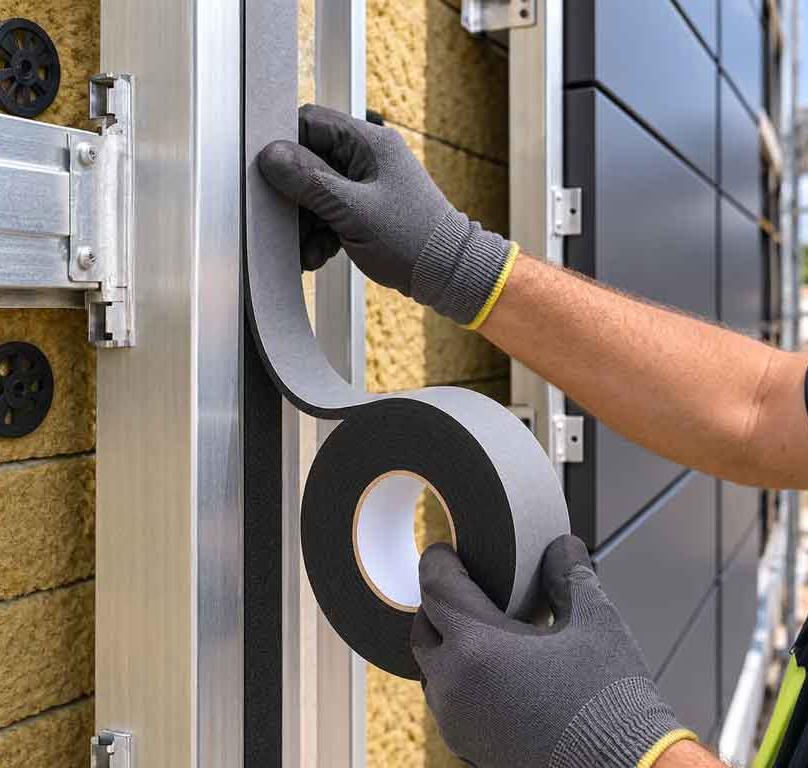
As a self-adhesive sealing strip, it is especially suited to sealing load-bearing profiles in wall systems and ventilated façades, in both timber structures and other materials. Its modified acrylic adhesive makes it easy to fix to the surface, while the foam backing conforms to small irregularities in the building elements. Using this tape for ventilated façades makes it possible to add a separation and sealing layer between the profiles and the cladding elements. Its resistance to UV rays and condensation water provides suitable performance for construction applications where these factors must be taken into account.
In enclosure systems, the curtain wall tape helps absorb vibration at the ribs of the structure, supporting the separation between components and improving the soundproofing of cladding elements.
It can also be used as a joint sealing tape, acting as a weatherstrip or waterproof gasket in certain applications. Its flexibility allows it to conform to different geometries, including hard-to-reach areas, elbows and copper pipe elements. The glazing foam tape can also be used in applications where a flexible separation and protection gasket is needed between elements. Its compressibility and dimensional stability make it easy to integrate into glazing systems compatible with the characteristics of the product.
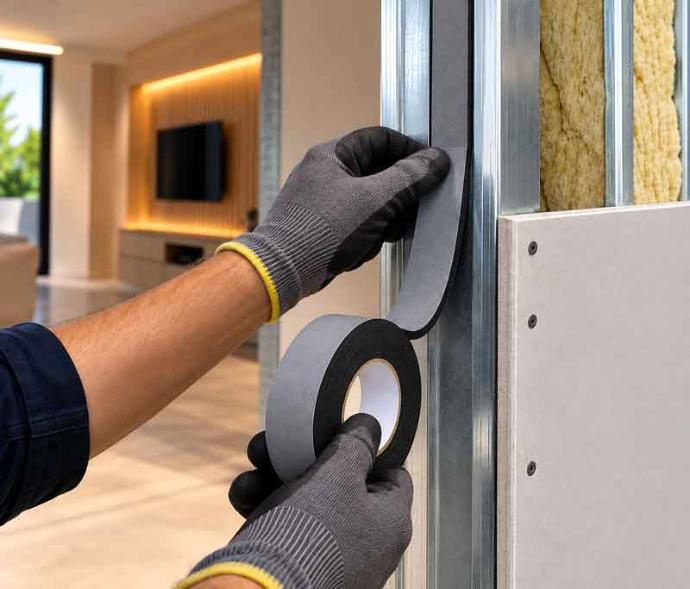
In addition, its use as a thermal insulation tape helps reduce rigid contact between building components, helping to limit thermal and acoustic bridges in certain assembly configurations.
The profile sealing strip is designed for fast, efficient application. Its format without a separate protective liner speeds up placement during installation, reducing the operations needed to apply the tape. Thanks to these characteristics, ATyT’s self-adhesive foam sealing strip tape is a versatile solution for construction professionals, ventilated façade installers, enclosure manufacturers and companies specializing in acoustic insulation and cladding systems.
PROPIEDADES ADHESIVAS | VALORES |
Weight per unit area | 20 g/m2 |
Adhesion to steel | < 7,5 N/cm |
Liner thickness | 30 µm |
Foam thickness | 3 mm |
Density | 30 kg/m3 |
Advantages That Make the Difference
- Acoustic insulation and vibration absorption: its cross-linked foam structure helps reduce the transmission of noise and vibration between the elements of a structure.
- High resistance to condensation water: allows its use in sealing and protection applications where condensation moisture may be present.
- Airtightness and conformability: its compressibility makes it easy to adapt to joints, profiles and surfaces with small irregularities, supporting the seal between components.
- UV resistance and dimensional stability: offers resistance to UV rays and excellent dimensional stability, characteristics suited to different construction applications.
- Fast, solvent-free application: its modified acrylic adhesive is formulated without solvents, and its format without a separate protective liner makes high-speed installation easier.
Application Conditions
To ensure optimal performance of the self-adhesive foam sealing strip tape:
- The application surface must be clean, dry and free of dust, grease, oil and other anti-adhesive substances.
- Apply the tape to the relevant profile, joint or building element, ensuring even placement.
- Apply enough pressure during installation to achieve proper contact between the adhesive and the surface.
- Avoid excessive compression of the foam, which could compromise its conformability and vibration absorption.
- Check beforehand that the tape is compatible with the contact materials and working conditions.
-
Carry out an application test to verify that the sealing, insulation or damping performance is suitable for the construction system.
Sealing and Acoustic Insulation on a Ventilated Façade with Foam Sealing Strip
Jordi, installation manager at a company specializing in ventilated façades, needed to improve the acoustic insulation and airtightness of the load-bearing profiles of a residential building. He was looking for a flexible solution that would reduce the transmission of vibration between the structural elements and the exterior cladding, as well as offer resistance to condensation water.
After analyzing the needs of the project, ATyT recommended the self-adhesive foam sealing strip tape, made with cross-linked polyethylene foam and modified acrylic adhesive. Its compressibility, dimensional stability and resistance to condensation water make it a suitable solution for separation and sealing applications in construction systems.
During installation, Jordi applied the self-adhesive sealing strip over the load-bearing profiles of the façade, creating a flexible layer between the structure and the cladding elements. The ease of application and the format without a separate protective liner sped up assembly work, while the foam helped dampen vibration at the contact points.
Thanks to this solution, Jordi was able to add a separation and sealing layer that supports acoustic insulation and protection against condensation water. ATyT’s tape for ventilated façades thus became a practical solution for improving the execution of cladding systems and optimizing installation processes.
Frequently Asked Questions
The sealing strip tape is used for sealing joints and profiles, acoustic insulation and vibration absorption in construction systems. It is especially suited to ventilated façades, curtain walls, interior linings and other applications that require a flexible separation between materials.
Yes. The foam tape for acoustic insulation features a cross-linked polyethylene foam that helps reduce the transmission of vibration and noise between building elements. Placing it between profiles and cladding creates a mechanical separation that supports the acoustic performance of the assembly.
Yes. The tape for ventilated façades is suited to sealing load-bearing profiles in timber structures and other materials. Its resistance to condensation water, flexibility and dimensional stability make it easy to integrate into exterior cladding systems.
The joint sealing tape has high resistance to condensation water, so it can be used in construction applications where moisture may be present. However, the final watertightness will depend on the joint design, the compression applied and the installation conditions.
The tape is made with cross-linked polyethylene foam 3 mm thick with a density of 30 kg/m³, combined with a cold-laminated HDPE film. This composition provides flexibility, compressibility and dimensional stability.
Yes. The curtain wall tape can be placed over the ribs and structural profiles to help absorb vibration. It can also be used as a glazing foam tape in compatible applications that require a flexible separation and protection gasket between components.
The surface must be clean, dry and free of dust, grease and oil. The self-adhesive sealing strip should be placed evenly over the profile or joint, applying enough pressure to ensure adhesive contact. It is important to avoid excessive compression of the foam and to check its compatibility with the materials beforehand.
It is recommended to keep the tape in its original packaging, protected from direct sunlight and moisture, at a temperature between 20 and 30 °C. To preserve its properties, it is recommended to use the product within 24 months of receipt.
More than 1,500 customers have already placed their trust in ATyT.
Do you want to offer adhesive solutions that are up to the task of your projects?
Contact our technical team, and we’ll help you choose the adhesive tape that best suits your needs.
Select Your Country


